Through a Glass Darkly Symposium

About the Symposium
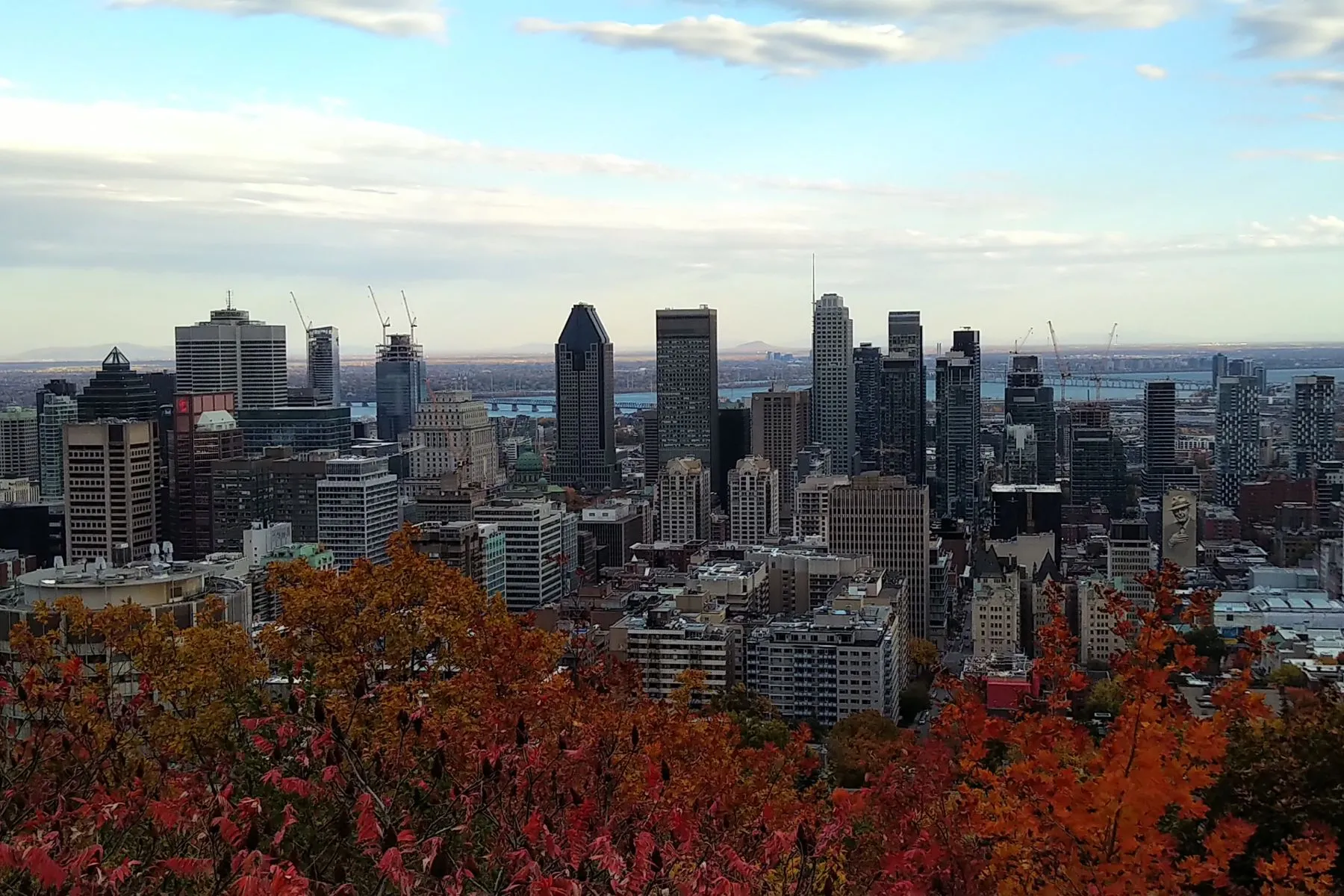
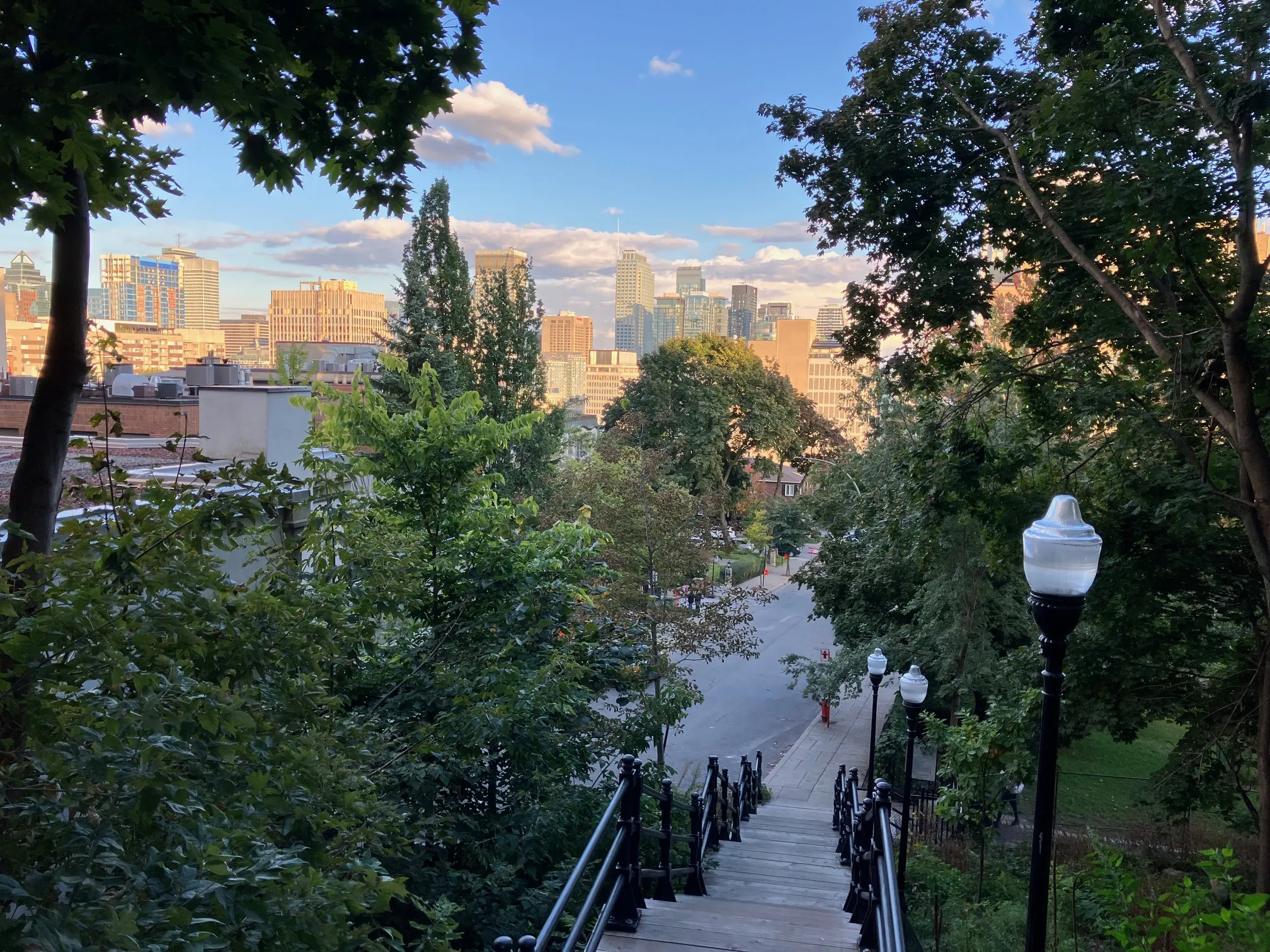
Montreal Skyline

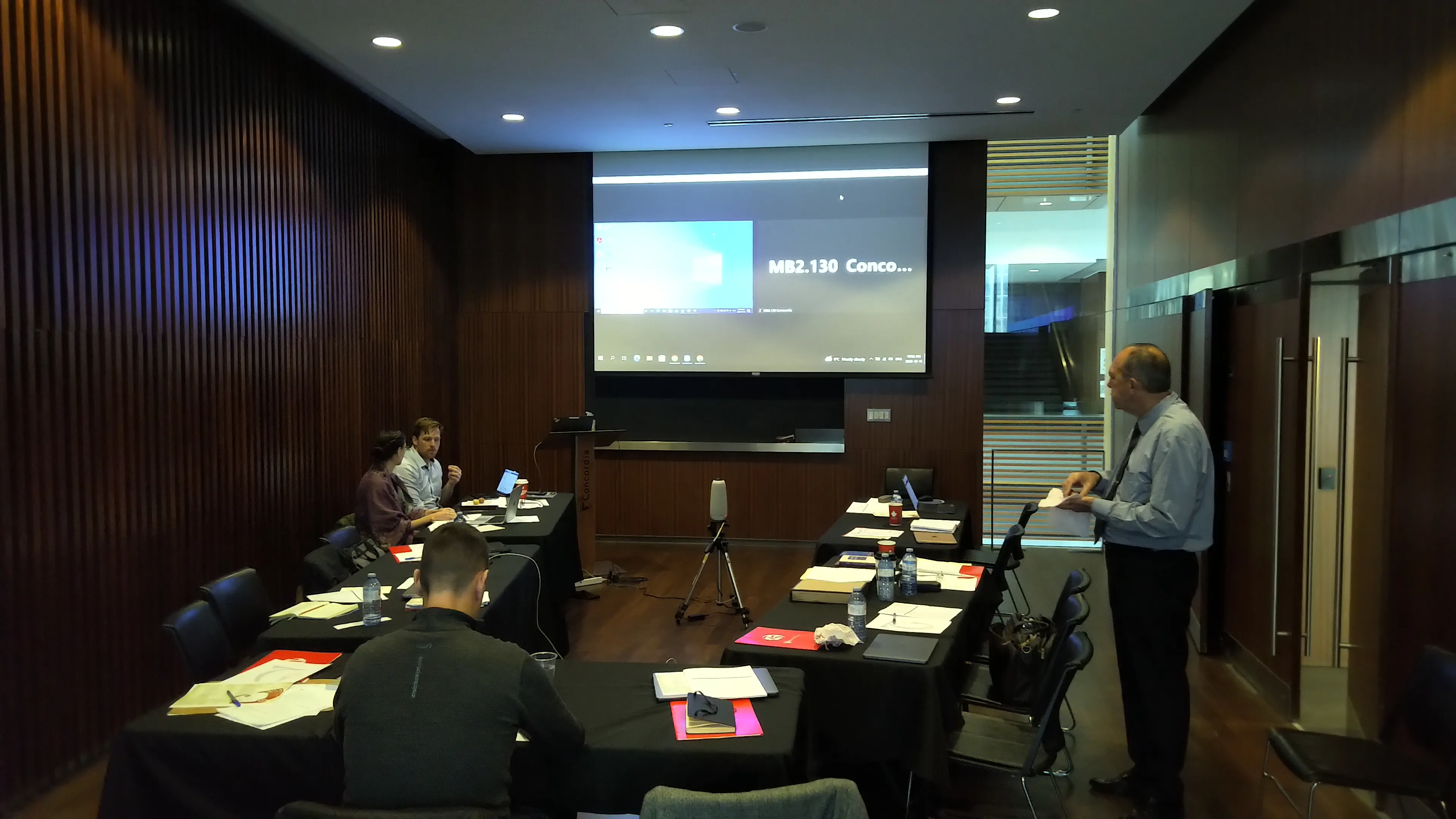
The study of humankind's fascination with the apocalyptic worldview is a vast field which has increased in interest over the last three decades with the approach and passing of the start of a new millennium. It is a subject that spans cultures, religions, time, and space, and one that resists easy categorical definition. In Through a Glass Darkly, scholars and artists gather each year to deliver presentations and engage in dialogue.

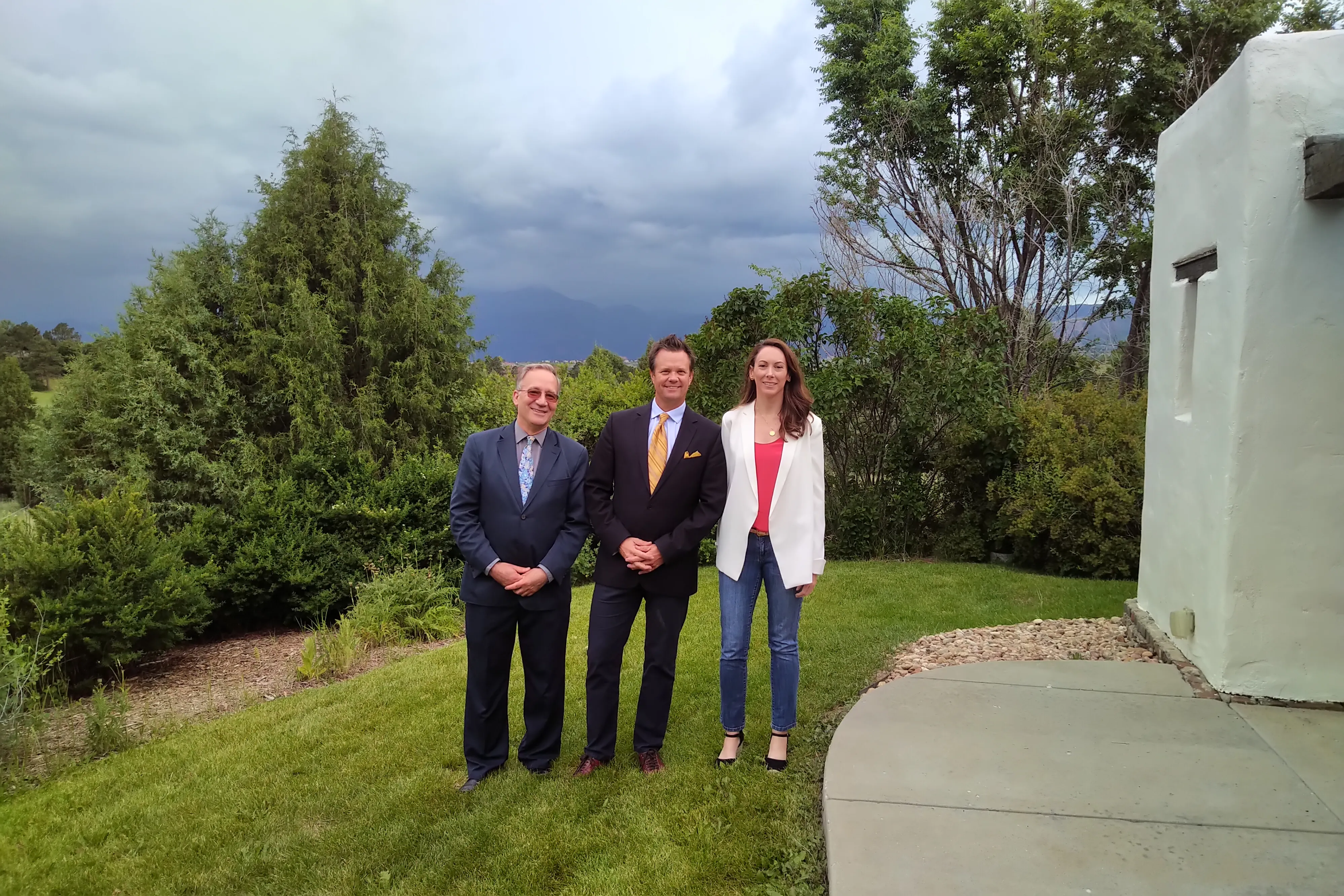
Through a Glass Darkly was founded in 2015 and is directed by UCCS Humanities Program Director Colin McAllister. In 2018, Lorenzo DiTommaso of Concordia University Montréal joined as Co-Director. Through a Glass Darkly is underwritten by the UCCS Humanities Program, the Heller Center for Arts & Humanities, the Department of Religions and Cultures at Concordia University Montréal, the School of Religious Studies at McGill University, and a grant from the Social Sciences and Humanities Research Council of Canada / Conseil de recherches en sciences humaines du Canada.

Schedule & Presenters

Through a Glass Darkly 2026

Monday, 16 March 2026     

Opening Reception, 4:30-6:00pm   *Clyde's Gastropub*

Book release presentation and discussion

An Anonymous Irish Gloss on the Apocalypse by Francis X. Gumerlock (Brepols Library of Christian Sources, vol. 14, 2025)

Film Screening—Werckmeister Harmonies (2000, dir. Béla Tarr), based on The Melancholy of Resistance by László Krasznahorkai (2025 Nobel Prize for Literature)

6:00-9:00pm   *UC 302 Theatre*

Introductory talk by Nadine Boljkovac (Assistant Professor of Film Studies, UCCS) 


Tuesday, 17 March 2026      *Heller Center for the Arts & Humanities*

Welcome and Introduction—Colin McAllister (UCCS)                                9:00-9:15a


Session 1

Varieties of Eschatological Time: From Mundus Senescens to Eternity in Dante's Afterlife Gillian Adler (Esther Raushenbush Chair in Humanities, Sarah Lawrence College)   9:15-10:00a

            In the Commedia, Dante navigates the medieval tension between the experience of time as a fragmented, linear sequence of decline and the theological ideal of an eternal, “standing” now (nunc stans). This paper examines how Dante uses the eschatological conditions of the three canticles to map distinct varieties of temporal experience: the stagnant, recursive time of Inferno, the linear, restorative labor of Purgatorio, and the simultaneous eternity of Paradiso. By analyzing a few key structural moments, from the decay symbolized by the Old Man of Crete to the rhythmic, penitential synchronization of souls on Purgatory, this paper demonstrates how the poem seeks to mend the friction of human history. Dante’s journey becomes a poetic architecture to realign the scattered time of the individual with the divine, transforming history from a sequence of loss into a single “volume” of unified meaning.


Different Concepts of Time in the New Testament and Its Reception History  

Gerbern S. Oegema (Professor of Religious Studies, McGill University)   10:00-1045a

            This paper will provide an overview of different concepts of time in the New Testament and its reception history in the Early Church (until 600 CE). The concept of time in the New Testament moves between the two key terms “chronos” and “kairos”, between chronology and divinely appointed time, in which the coming of Christ takes center stage. Whereas time itself is a complex concept, the focus of this paper will be on a christocentrically understood eschatological time, and how this shapes the past, present and future. After a brief study of apocalypses, apocalypticism and eschatology against its Jewish background, we will discuss several themes and questions that emerge from this overview. As themes we will deal with the production of new apocalypses, the integration of an apocalyptic worldview in Christian theology and the development of early Patristic eschatology.


Session 2

Heidegger and Eschatology: The Promise of Poetry in the Modern Age

James Reid (Professor of Philosophy, Metropolitan State University)   11:00-11:45a                                                                                                         

            Over the course of nearly half a century, Martin Heidegger attempted to rethink the nature of time, beginning with his early lecture courses on the New Testament and continuing into his later writings on the nature of history and the shape of modern life. Although he resists the language of eschatology and apocalypse, his philosophical account of history and its epochs possesses what we might call an apocalyptic or eschatological structure. Eventually, Heidegger began to see in certain privileged poets the prospect of an original revelation of the world. My talk offers an interpretation of Heidegger’s views of poetry, centered on the Swabian poet Friedrich Hölderlin, who is for Heidegger the poet capable of renewing life (or ‘being’ itself) in the modern age. Drawing from a series of lecture courses and essays on Hölderlin, beginning in 1934/5, we’ll see that poetry plays a central role in Heidegger’s efforts to lay foundations for another, post-metaphysical way of inhabiting the world.


Concepts of Time and History in the Middle Ages

Lorenzo DiTommaso (Professor of Religions and Cultures, Concordia University Montréal)  11:45a-12:30p                                                                   

            Christian perceptions of time and history dominated the cultural landscape of medieval Europe. These perceptions were shaped by the apocalyptic worldview, and Christianity was an apocalyptic religion from inception. This paper reviews how time and history were imagined and experienced in western Europe in the Middle Ages. Special attention is devoted to explaining the place of recurrent structures within macrocosmic time.


BREAK


Session 3

Time in Gravity and Quantum Mechanics

Chris Akers (Assiatnt Professor of Physics, University of Colorado, Boulder)  1:45-2:30p

How scientists have understood 'time' has changed over the centuries. I’ll review these developments and discuss the exciting questions about time that physicists wrestle with today.


Hauntings Fraught: Joachimite Trinitarian Time and von Balthasar's Theology of the Descent

Colin McAllister (Director of Humanities, UCCS)  2:30-3:15p

            This paper explores points of reference in the apocalyptic theology of the twelfth-century Calabrian abbot, Joachim of Fiore (ca. 1135-1202)—whose ideas continue to pervade contemporary discourse—and Hans Urs von Balthasar (1905-88), the great interlocutor of Western modernity who is widely regarded as one of the most important Catholic theologians of the twentieth century. Von Balthasar is often posited in opposition to Joachim's ideas about the apocalypse, and the way that his writings 'haunted' German Idealism, resulting in what Cyril O'Regan calls a 'misremembering', an intellectual distortion which wrongly interprets and alters the Christian past to fit a particular system, replacing it with a secularized counterfeit. And yet, for both men, an emphasis on the third person of the Trinity, the Holy Spirit, fundamentally shaped their views of the eschaton. I will first explicate Joachim's understanding of time and the Trinity via his rich Liber Figurarum and briefly trace his continuing influence upon modern culture, philosophy, and theology, before turning to an examination of von Balthasar's theology of the descent as an eschatological pillar. 


Closing Remarks and a look ahead to TAGD XI Montreal—Lorenzo DiTommaso and Gerbern Oegema 3:15-3:30p

Roundtable discussion with students from VAPA 3900—Arts and Apocalypse  3:30-4:30p


Information

Locations

Heller Center for Arts & Humanities

1250 North Campus Heights

Colorado Springs, CO 80918

Contact

For questions regarding the Through a Glass Darkly Symposium, please contact Colin McAllister:

Symposium Directors

Colin McAllister
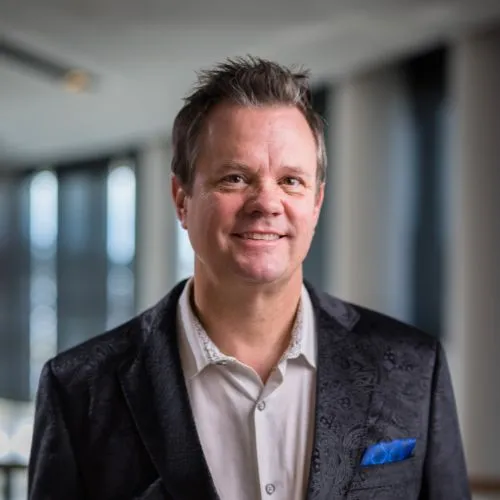
Colin McAllister professional headshot

Symposium Director

Colin McAllister is Director of Humanities and an Associate Professor of Music at the University of Colorado Colorado Springs. 

His publications include the Cambridge Companion to Apocalyptic Literature, a translation of the Cambridge Glossa in Apocalypsin (Brepols) and—with Lorenzo DiTommaso—Music in the Apocalyptic Mode (Brill, 2023). His most-recent work will appear in 2027 in the forthcoming John’s Revelation and Its Long Reception: Explorations from Antiquity until Today (BETL, Peeters).

Lorenzo DiTommaso
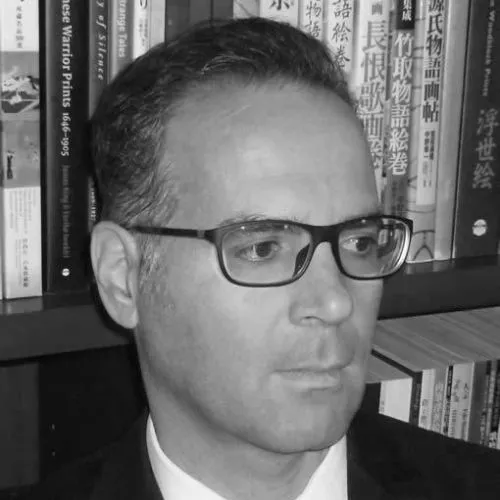
closeup image of Lorenzo DiTommaso

Symposium Director

Lorenzo DiTommaso is a Professor of Religions & Cultures at Concordia University Montreal. He studies apocalypticism from biblical apocalypses to contemporary apocalyptic manga and anime.

Among his current projects is the medieval Antichrist, for which he has received a five-year grant from the Social Sciences and Humanities Research Council of Canada. His new book, The Architecture of Apocalypticism, the first volume of a trilogy, is forthcoming for Oxford University Press.

Symposium Program Archives